Are you looking for Upper Mustang Trek Guide in Nepal? /Porter/Porterguide
Upper Mustang Trek is known as Buddhist historical place in Nepal. The place was Salt trade route in ancient period. In this Trek you can see the deserted Landscape, Buddhist Monasteries, Chorten,Red Cliffs, Ancient Caves and Tibetan People Life Style with their Culture. Along with We will be Praised of Mt Dhaulagiri and Nilgiri Panorama. So that, this is popular Trek in Nepal and many of Local Trekking agencies organize trek in Budget. But we have Trekking Guide services as well. If you are looking for hiring Upper Mustang Trek Guide then sure we provide you as your require. We have Professional and experience license holder Trekking Guide in Nepal. Along with, we Provide Porter and Porterguide.
How much does the Upper Mustang Trek Guide Cost in Nepal?Porter/Porterguide
Guide Cost is 40$ Per day
Porterguide Cost is 45$ per day
Porter Cost is 30$ Per day
Above the Cost includes:-Trekking Guide,Porter,Porterguide(insurance)/accommodation & Meals during the Trek. Clients do not have to pay.
Above the Cost does not includes:- Trekking Guide,Porter,Porterguide (Transportation) need to pay by the Tourist Trekker.( Clients have to pay)
Note: If you want to have our Package with us, We would like to kindly inform you that our cost or price is 4000$ Per Person This cost includes your Trekking meals,Tea, coffee, Accommodation, All the Domestic flights and Transportation, Guide, Porter, Upper Mustang Trek Permits, Trekking Maps etc.
Day 3: Fly to Jomsom (2,720 m) and Trek to Kagbeni (2,810 m)
Scenic mountain flight
Easy walk along the Kali Gandaki Valley
Entry checkpoint for Upper Mustang restricted area
Walking: 3–4 hours
Day 4: Kagbeni → Chele (3,050 m)
Trek through dry desert landscapes
Pass traditional Tibetan-style villages
Walking: 5–6 hours
Day 5: Chele → Syangboche (3,800 m)
Cross Taklam La and Dajori La passes
Great views of Nilgiri and Mustang valleys
Walking: 6–7 hours
Day 6: Syangboche → Ghami (3,520 m)
Trek through ancient settlements and mani walls
Visit traditional monasteries
Walking: 5–6 hours
Day 7: Ghami → Tsarang (3,560 m)
Cross suspension bridges and barren canyons
Explore Tsarang Monastery and old palace
Walking: 5–6 hours
Day 8: Tsarang → Lo Manthang (3,840 m)
Reach the ancient walled kingdom of Mustang
Visit royal palace and monasteries
Walking: 4–5 hours
Day 9: Exploration Day in Lo Manthang
Optional side trips:
Chhoser Cave
Ancient sky caves and monasteries
Traditional Tibetan culture and local villages
Day 10: Lo Manthang → Drakmar (3,810 m)
Return via a different route
Beautiful red cliffs and caves
Walking: 6–7 hours
Day 11: Drakmar → Ghiling (3,570 m)
Scenic descent through Mustang valleys
Visit local monasteries and villages
Walking: 5–6 hours
Day 12: Ghiling → Chhuksang (2,980 m)
Long downhill trail
Dry cliffs and dramatic canyon scenery
Walking: 6–7 hours
Day 13: Chhuksang → Jomsom
Finish trekking route
Celebrate completion of the trek
Walking: 6–7 hours
Day 14: Fly to Pokhara and Return to Kathmandu
Morning flight from Jomsom
Transfer to Kathmandu by flight or tourist bus
End of trip
Upper Mustang Trek Itinerary with Yara & Ghara (16 Days)
The Upper Mustang trek with Yara and Ghara is one of Nepal’s best remote Himalayan adventures. This route combines the ancient kingdom of Mustang, Tibetan culture, caves, monasteries, and the famous Luri Gompa area.
Day 1: Kathmandu → Pokhara
Drive or flight to Pokhara
Trek briefing and permit preparation
Overnight in Pokhara
Day 2: Pokhara → Jomsom → Kagbeni
Early flight to Jomsom
Trek to Kagbeni
Walking: 3–4 hours
Altitude: 2,800 m
Day 3: Kagbeni → Chele
Enter restricted Upper Mustang region
Walk along Kali Gandaki valley
Walking: 5–6 hours
Altitude: 3,050 m
Day 4: Chele → Syangboche
Cross Taklam La and Dajori La passes
Beautiful views of Nilgiri and Mustang valleys
Walking: 6–7 hours
Altitude: 3,800 m
Day 5: Syangboche → Ghami
Pass through traditional villages and mani walls
Walking: 5–6 hours
Altitude: 3,520 m
Day 6: Ghami → Tsarang
Visit ancient monasteries and red cliffs
Walking: 5–6 hours
Altitude: 3,560 m
Day 7: Tsarang → Lo Manthang
Reach the ancient capital of Mustang
Explore palace and monasteries
Walking: 4–5 hours
Altitude: 3,840 m
Day 8: Exploration Day in Lo Manthang
Explore:
Chhoser caves
Namgyal Gompa
Ancient monasteries
Optional horse riding
Day 9: Lo Manthang → Yara
Remote trail toward eastern Mustang
Wild canyon landscapes
Walking: 6–7 hours
Altitude: 3,650 m
Day 10: Yara → Luri Gompa → Ghara
Visit sacred Luri Gompa
Explore cave monastery and ancient murals
Continue to Ghara
Walking: 7–8 hours
Altitude: 3,900 m
Day 11: Ghara → Tange
Cross isolated Mustang terrain
Traditional Tibetan villages
Walking: 7 hours
Altitude: 3,240 m
Day 12: Tange → Tetang
Cross high windy passes
Stunning Himalayan scenery
Walking: 7–8 hours
Altitude: 3,040 m
Day 13: Tetang → Muktinath
Reach sacred pilgrimage site
Visit temple area
Walking: 5–6 hours
Altitude: 3,800 m
Day 14: Muktinath → Jomsom
Scenic descent through Kali Gandaki valley
Walking: 5–6 hours
Day 15: Jomsom → Pokhara
Morning flight to Pokhara
Relaxation and sightseeing
Day 16: Pokhara → Kathmandu
Drive or flight back to Kathmandu
Upper Mustang Jeep Tour Itinerary (9 Days Example)
Day 1: Kathmandu → Pokhara (Drive / Flight)
Drive: 6–8 hours or short flight
Leisure in Pokhara lakeside
Trip briefing and permit check
Day 2: Pokhara → Jomsom → Kagbeni (2,800 m)
Early flight or jeep drive via Beni–Kali Gandaki valley
Enter Mustang region
Visit Kagbeni village
Overnight in Kagbeni
Day 3: Kagbeni → Chele → Syanboche
Restricted area entry checkpoint
Drive through dry canyon landscapes
Visit traditional Tibetan-style villages
Overnight in Syanboche
Day 4: Syanboche → Ghami (3,520 m)
Cross high desert terrain
Visit ancient chortens and cliffs
Explore Ghami village
Overnight stay
Day 5: Ghami → Charang → Lo Manthang (3,840 m)
Visit Charang monastery and palace ruins
Scenic drive through plateau
Arrival at walled city Lo Manthang
Explore local culture & royal palace
Day 6: Explore Lo Manthang
Day trip to Chhoser caves (sky caves)
Visit monasteries: Jampa, Thubchen, Chode
Optional horse riding / local interaction
Day 7: Lo Manthang → Dhakmar / Ghiling
Return journey with alternative route
Visit red cliffs of Dhakmar
Overnight stay
Day 8: Ghiling → Kagbeni
Drive back through Mustang valley
Relax in Kagbeni village
Day 9: Kagbeni → Jomsom → Pokhara
Drive or flight back
End of Upper Mustang jeep tour
Best time for Upper Mustang Trek
The best time for the Upper Mustang Trek is generally from March to November, but the ideal seasons are:
Spring Season (March – May)
This is one of the most popular times for trekking.
Highlights
Clear mountain views of the Annapurna Region and Dhaulagiri
Pleasant daytime temperatures
Colorful landscapes and blooming flowers
Comfortable trekking conditions
Temperature
Day: 12°C to 20°C
Night: -2°C to 5°C in higher areas
Autumn Season (September – November)
Another excellent trekking season.
Highlights
Stable weather and blue skies
Best visibility for photography
Dry trails and comfortable walking
Famous Tiji Festival may occur around May depending on the Tibetan lunar calendar
Temperature
Day: 10°C to 18°C
Night: -5°C to 3°C
Why Upper Mustang is Special During Monsoon (June – August)
Unlike many trekking areas in Nepal, Upper Mustang lies in the rain-shadow area of the Himalayas.
Benefits
Very little rainfall
Good trekking conditions even during Nepal’s monsoon
Unique desert-like landscapes
Fewer trekkers and quieter trails
This makes Upper Mustang one of the best summer treks in Nepal.
Winter Season (December – February)
Possible, but not ideal.
Challenges
Very cold temperatures
Strong winds
Snowfall at high passes
Some lodges may close
Best Overall Recommendation
Best weather: March to May & September to November
Best for fewer crowds: June to August
Best photography: Autumn season
Best cultural experience: Tiji Festival season in spring
Major Attractions of Upper Mustang Trek
Ancient Walled City of Lo Manthang
The highlight of the trek is the ancient capital city of Lo Manthang. Surrounded by mud walls, the town preserves centuries-old Tibetan Buddhist culture, royal palaces, monasteries, and traditional houses.
Unique Desert Landscape
Upper Mustang looks very different from other trekking regions of Nepal. The area has dry valleys, colorful rock formations, deep canyons, and wind-eroded cliffs similar to the Tibetan Plateau.
Ancient Monasteries and Buddhist Culture
The region is rich in Tibetan Buddhist heritage. Trekkers can visit ancient monasteries such as:
Jampa Monastery
Thubchen Monastery
Chhoser Monastery
Prayer flags, mani walls, chortens, and traditional villages make the cultural experience very special.
Sky Caves of Mustang
Thousands of mysterious man-made caves are carved high into cliffs. Some were used as meditation chambers, burial sites, and ancient homes many centuries ago.
Stunning Himalayan Views
Trekkers enjoy beautiful views of Himalayan peaks including:
Nilgiri
Dhaulagiri
Annapurna
Traditional Tibetan Villages
Villages such as Ghami, Tsarang, and Kagbeni offer authentic Tibetan-influenced lifestyles, old monasteries, and warm local hospitality.
Tiji Festival
The famous Tiji Festival in Lo Manthang is a colorful Buddhist celebration with masked dances, rituals, and cultural performances. It is one of the best cultural festivals in the Himalayas.
Restricted & Preserved Region
Because Upper Mustang was restricted to foreigners until 1992, the culture and environment remain highly preserved. This makes the trek feel remote, authentic, and culturally rich.
Best Things About the Trek
Unique Tibetan culture
Ancient kingdom atmosphere
Easy-to-moderate trekking trails
Dramatic desert scenery
Rich Buddhist heritage
Less crowded than Everest or Annapurna regions
Upper Mustang Trek Equipment List
The Upper Mustang trek is a dry, windy, high-altitude trek with strong sun exposure and cold mornings/nights. Packing light but smart is important.
Clothing
Base Layers
2–3 moisture-wicking T-shirts
1–2 thermal tops
1–2 thermal bottoms
Quick-dry underwear
Mid Layers
Fleece jacket or pullover
Lightweight down jacket
Soft-shell jacket (optional)
Outer Layers
Waterproof and windproof jacket
Waterproof trekking pants/rain pants
Windbreaker
Trekking Pants
2 trekking pants
1 hiking shorts
Thermal trousers (for colder months)
Headwear
Sun hat or cap
Warm wool/fleece hat
Buff or neck gaiter (very useful for Mustang dust)
UV sunglasses
Gloves
Lightweight inner gloves
Warm insulated gloves
Footwear
Waterproof trekking boots (well broken-in)
Trekking socks (4–5 pairs)
Thermal/wool socks
Sandals or camp shoes
Bags
35–45L daypack with rain cover
Duffel bag for porter
Dry bags or waterproof stuff sacks
Sleeping Gear
Sleeping bag rated around -10°C to -15°C
Sleeping bag liner (optional)
Trekking Equipment
Trekking poles
Headlamp with extra batteries
Reusable water bottles or hydration bladder
Water purification tablets/filter
Power bank
Camera/phone charger
Universal travel adapter
Personal Items & Toiletries
Sunscreen SPF 50+
Lip balm with SPF
Toothbrush & toothpaste
Wet wipes
Hand sanitizer
Quick-dry towel
Toilet paper
Nail clipper
Soap/shampoo (small size)
First Aid & Medicines
Personal medications
Basic first aid kit
Diamox (consult doctor before use)
Blister treatment
Pain relievers
Bandages and tape
ORS/electrolyte powder
Important Documents
Passport copy
Trekking permits
Travel insurance
Passport photos
Cash in Nepali Rupees
Optional but Useful
Binoculars
Snacks/energy bars
Notebook/book
Gaiters (winter or dusty season)
Dust mask
Major Caves of Upper Mustang
Chhoser Sky Caves
Near Chhoser village, these are the most famous caves in Upper Mustang.
Hundreds of man-made caves carved into vertical cliffs
Believed to be over 2,000 years old
Some caves were used as homes, burial sites, and meditation chambers
The famous Jhong Cave has multiple floors connected by tunnels and ladders
Located close to the Nepal–Tibet border
Jhong Cave
A special cave complex near Chhoser village.
Multi-story cave with around 40 rooms
Narrow tunnels and hidden chambers
Ancient wall carvings and storage rooms
One of the best-preserved cave systems in Mustang
Luri Gompa Cave
Located near Yara and Ghara.
Ancient cave monastery built inside a cliff
Famous for beautiful Buddhist murals and chortens
Important meditation and religious site
Usually visited on the Yara–Ghara side trip
Nyiphu Cave Monastery
Also near Chhoser.
Historic meditation cave monastery
Associated with Guru Rinpoche legends
Contains prayer rooms and ancient statues
Still used by monks today
Garphu and Ritseling Caves
Remote meditation caves in Upper Mustang.
Used by Buddhist monks for meditation retreats
Less visited and more isolated
Offer panoramic views of the Mustang valleys
Why These Caves Are Important
Archaeologists discovered ancient human skeletons, manuscripts, and artifacts inside some caves.
Many caves date back more than 2,000 years.
They show the old Tibetan Buddhist culture and early Himalayan civilization.
Upper Mustang is often called the “Kingdom of Sky Caves.”
The caves are usually explored during treks through Lo Manthang, Chhoser, and the Yara–Ghara region.
Daily Budget for the Upper Mustang Trek
The daily budget for the Upper Mustang Trek depends on your trekking style, group size, transportation, and whether you choose a tea house trek or a fully organized package.
Budget Trek (Independent / Basic Tea House)
Approx. USD 40–50 per day (excluding permits)
Includes:
Basic lodge accommodation
Simple meals (dal bhat, noodles, soup, tea)
Shared transport where possible
Typical daily costs:
Room: USD 5–40
Meals: USD 40–50
Snacks & drinks: USD 5–10
Charging/Wi-Fi/hot shower: USD 3–8
Local Guides for Upper Mustang Trek
Enjoy Nepal Treks Expedition and Tours Pvt.Ltd. has been proving the Legal Local Nepalse Licensed Guides for Upper Mustang Trek who are highly qualified, experienced and Trained Guides of Nepal. What to look for in an Upper Mustang guide
Hold a government trekking guide license
Have multiple Upper Mustang trekking experiences
Understand Tibetan Buddhist culture and monasteries
Speak good English
Help with permits, flights, logistics, and altitude management
Temperature Information for Upper Mustang
Upper Mustang has a cold, dry, trans-Himalayan desert climate. Because it lies in the rain shadow of the Annapurna and Dhaulagiri ranges, it receives very little rainfall compared to other trekking regions of Nepal.
Seasonal Temperature Overview
Season
Day Temperature
Night Temperature
Conditions
December – February
0°C to 5°C
-25°C to -20°C
Very cold, snow possible
March – June
16°C to 22°C
-6°C to -2°C
Pleasant trekking weather
July – September
20°C to 33°C
-3°C to 0°C
Warm and dry despite monsoon
October – November
12°C to 20°C
-8°C to -4°C
Clear skies and cool nights
Month-by-Month Temperature
Month
Avg Day Temp
Avg Night Temp
January
3°C
-15°C
February
5°C
-12°C
March
10°C
-2°C
April
15°C
2°C
May
20°C
5°C
June
22°C
10°C
July
21°C
10°C
August
20°C
8°C
September
18°C
6°C
October
15°C
3°C
November
10°C
-2°C
December
5°C
-10°C
Best Temperature Period for Trekking
Spring (March–May): Mild temperatures, blooming landscapes, and comfortable trekking conditions.
Summer/Monsoon (June–August): One of the few trekking regions in Nepal that remains dry during monsoon.
Autumn (September–November): Clear mountain views and stable weather.
Winter (December–February): Extremely cold with heavy winds and snow in higher passes.
Important Notes
Wind in Upper Mustang can make temperatures feel much colder, especially in the afternoon.
High places like Lo Manthang and passes above 4,000 m are significantly colder than lower villages.
Even in summer, nights can drop below freezing.
Solo or single Person permit for Upper Mustang trek
Upper Mustang Trek Permit (Solo / Single Person – 2026 Update)
For Upper Mustang, the permit rules are a bit strict compared to normal treks in Nepal.
1. Can a solo (single) person get the permit?
️ Yes — but NOT independently
You cannot apply for the Upper Mustang Restricted Area Permit (RAP) by yourself
It must be processed through a registered trekking agency in Nepal
A licensed guide is mandatory for the entire trek
2. Do you need another trekking partner?
Old rule:
Minimum 2 trekkers required
Current situation (2026):
Recent updates show solo trekkers can apply individually for permits
BUT you still go through an agency and trek with a guide
Agencies may still “pair” trekkers in paperwork, depending on logistics
So practically:
You can travel alone physically
You cannot trek independently without guide/agency system
You may still be registered as part of a group for permit processing
3. Key Rules for Upper Mustang Permit
Restricted Area Permit (RAP): ~$50 per day per person
ACAP permit also required
Licensed guide mandatory
Must be booked through trekking agency
Independent trekking is not allowed
Simple summary
If you are a single traveler:
✔ You can do Upper Mustang trek alone physically
✔ You can get the permit as a solo traveler through an agency
❌ You cannot trek independently without guide/agency involvement
Who are the best and experienced Guides for Upper Mustang Trek
Upper Mustang is a restricted trekking region, so the “best guides” are always government-licensed, Upper Mustang–experienced trekking guides working through registered agencies in Nepal. There are no truly “solo freelance” legal guides for Upper Mustang—you must go through a company.
Here are some of the most experienced and well-known guide teams and agencies for Upper Mustang trekking:
Strong logistics support (permits, flights, safety coordination)
Experienced in Upper Mustang, Annapurna, and Dolpo regions
Best for: reliable organization + safety + structured itineraries
What “best guide” means for Upper Mustang
A truly experienced Upper Mustang guide should have:
✔ Government trekking guide license (mandatory)
✔ Experience in restricted area trekking
✔ Knowledge of Tibetan Buddhist culture & monasteries
✔ High-altitude emergency handling skills
✔ Familiarity with villages like Kagbeni, Ghami, Tsarang, Lo Manthang
✔ Strong English or multilingual communication
Upper Mustang Trek accommodation info
Here’s a clear and practical overview of accommodation on the Upper Mustang Trek so you know exactly what to expect on the trail:
Accommodation in Upper Mustang Trek
Upper Mustang is a remote, restricted Himalayan region, so accommodation is simple, local, and functional rather than luxury-style. You will mainly stay in teahouses, lodges, and family-run guesthouses along the route.
1. Types of Accommodation
Teahouses (most common)
Found in almost every trekking village
Basic twin-sharing rooms
Foam mattress, pillow, and blankets provided
Shared bathrooms in most places
Warm dining room with stove in the evening
Local lodges / guesthouses
Slightly better than teahouses in bigger villages
More private rooms available
Better bedding and cleaner facilities
Common in Kagbeni, Ghami, Tsarang, and Lo Manthang
Lo Manthang → Best accommodation on the trek (still simple, but more developed)
Room & Facilities You Should Expect
Twin beds with basic mattresses
Blankets provided (but a sleeping bag is strongly recommended)
Shared toilets (some western-style in bigger villages)
No heating in rooms (only dining hall is heated)
Solar electricity in many villages (limited charging)
Hot showers available in some lodges (small extra cost)
Important Reality Check
Accommodation is not luxurious anywhere in Upper Mustang
Rooms are built for warmth and survival, not comfort
Walls are thin → noise and cold can be noticeable
During peak season (Oct/Apr), lodges can fill quickly
Pro Tips
Carry a warm sleeping bag (important)
Bring power bank (charging may cost extra)
Book through a guide/agency in peak season
Expect better facilities as you go closer to Lo Manthang
Upper Mustang Trek Meals Info
During the Upper Mustang trek, you will eat simple, freshly cooked teahouse food. The menu is not luxury, but it is hot, filling, and energy-rich—perfect for long trekking days in a dry, high-altitude region.
Pizza (limited but available in places like Lo Manthang)
Soups (garlic, vegetable, tomato)
3. Breakfast Options
Typical morning meals include:
Tibetan bread with jam or honey
Pancakes (banana, apple, chocolate)
Porridge / oats / muesli
Eggs (boiled, fried, omelette)
Toast with butter or cheese
Tea or coffee
4. Drinks on the Trek
Black tea / milk tea
Ginger lemon honey tea (good for altitude)
Instant coffee
Butter tea (Tibetan style)
Hot water (important for hydration)
Occasional soft drinks in villages
5. Food Style & Quality
Simple, home-cooked teahouse meals
Mostly Nepali + Tibetan style food
Food becomes more expensive as you go higher
Fresh vegetables are limited in upper villages
Meat is available but not always recommended in remote areas
Important Tips
Always prefer hot, cooked food
Stick to dal bhat + soups for best energy
Carry snacks like chocolate, nuts, or energy bars
Drink plenty of water (very important in dry Mustang)
Menu options repeat a lot after a few days
What else need to know for the Upper Mustang Trek Permit in Nepal?
Upper Mustang Trek is Restricted Trekking areas in Nepal, Therefore you have to obtain the Restricted areas Trekking Permit while going there. And Trekking Permit cost is as bellow:-
Upper Mustang Trek Permit cost is 500$(valid for 10 day) and if you extend it cost 50$ for a day.
Entry your Upper Mustang Trek Permit at Kagbeni and Exit at Kagbeni within the 10 days valid date.
In addition you take ACAP Permit.
TIMS-Not required.
Required Document for Upper Mustang Trek Permit in Nepal?
To issue your Upper Mustang Trek Permit it requires Nepal Visa Valid Original Passport Copy and Passport Size Photos/ Restricted areas Permit fees/Upper Mustang Trekking Itineraries/License Holder Trekking Guide/Trekking Guide insurance/ That your Trekking Permit you have to obtain at Local Trekking agencies in Kathmandu Nepal. For the individual it is prohibited to obtain Upper Mustang Trek Permit in Nepal. That’s why you have to join and hire Trekking Guide compulsory. Without Trekking Guide you are not allow to enter at the Check Point.
How many person need to be for Upper Mustang Trek Permit in Nepal?
It requires 2 People or Tourist Trekker to obtain the Upper Mustang Trek Permit in Nepal. If you are Solo then you can not obtain your Upper Mustang Trek permit, But you can join with other fixed departure Group to obtain your Upper Mustang Trek permit. Before your Trek for the Upper Mustang Trek contact to Local and legally registered Trekking agencies in Kathmandu Nepal. It is an important to contact Local Trekking agencies to issue your Trekking Permit. Individually, You can not issue your restricted areas Trekking Permit in Nepal.
Who arrange the Upper Mustang Trek Permit in Nepal?
We arrange your Upper Mustang Trekking Permit in Kathmandu Nepal. Enjoy Nepal Treks Expedition & Tours Pvt.Ltd is an Agency. Located in Kapan 12 Kathmandu. In 2017 registered Trekking agency. If you are thinking to Upper Mustang Trek in Nepal and looking for upper Mustang Trekking permit organizer then welcome at our Agency. We arrange your Trekking Permit in Kathmandu Nepal without any services Charge. Just pay your Permit fees.
Can go tourist Upper Mustang Trek without Nepalese Trekking Guide?
Upper Mustang Trek is Located in Restricted areas so that you need to hire the Nepalese license holder Trekking Guide. That’s why hire your Upper Mustang Trekking Guide with Legal Registered Trekking agencies in Kathmandu Nepal. It is an important to join with Trekking agencies to issue your Upper Mustang Trek permit. Individually you can not your obtain your Trekking permit, it is issued only by the Trekking agencies in Nepal.
Why and how to hire Upper Mustang Trek Guide in Nepal with us?
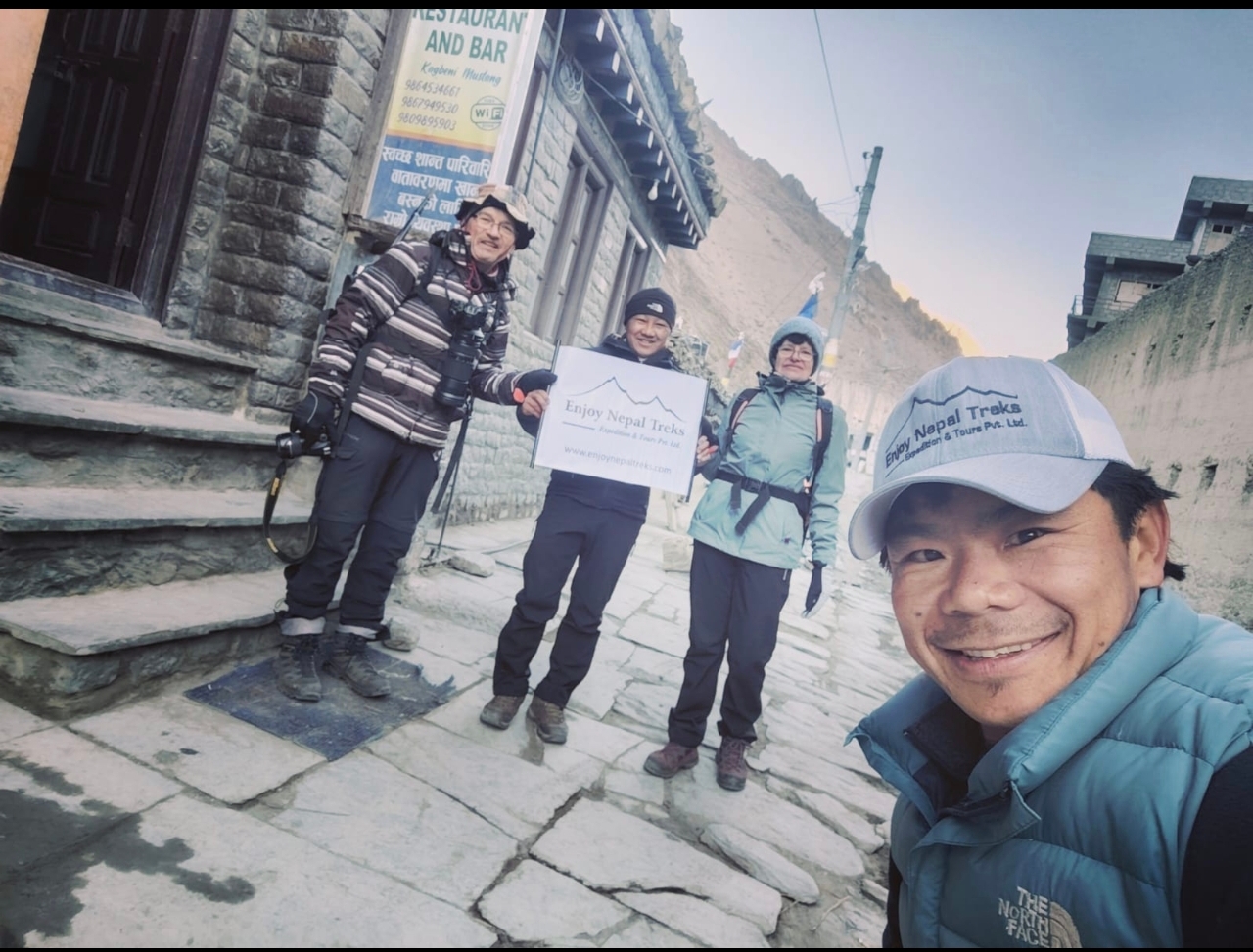
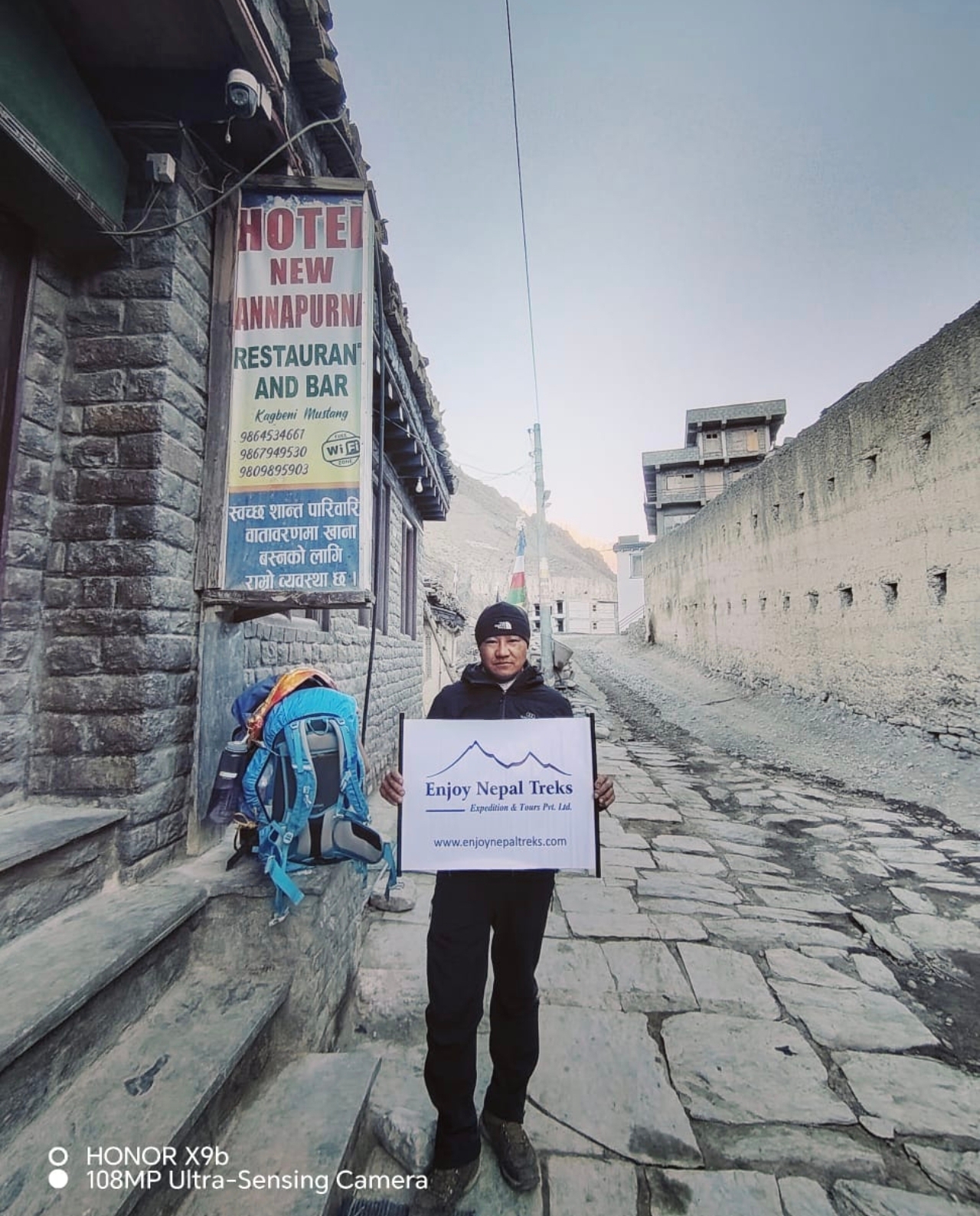
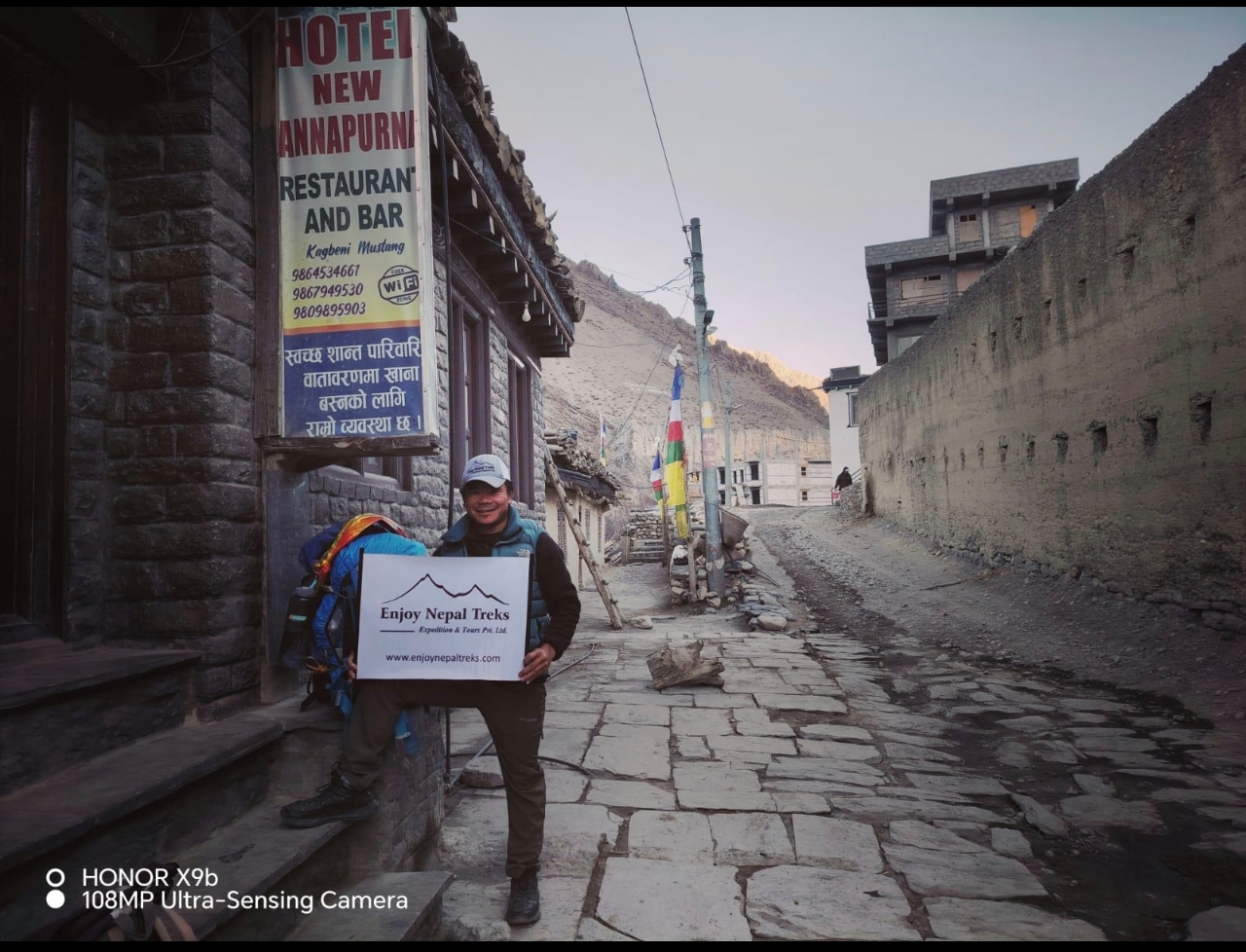
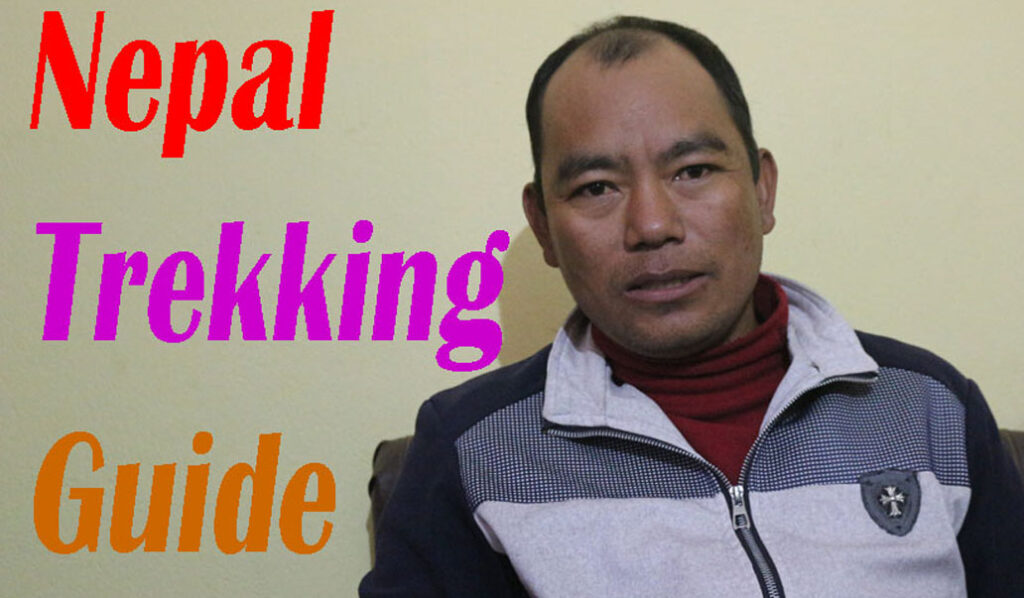
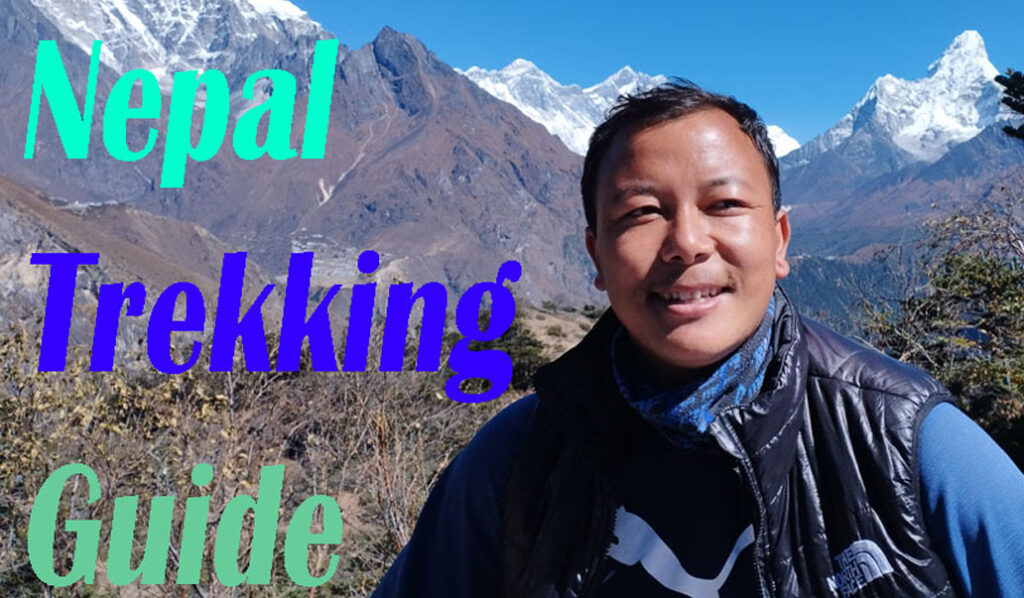
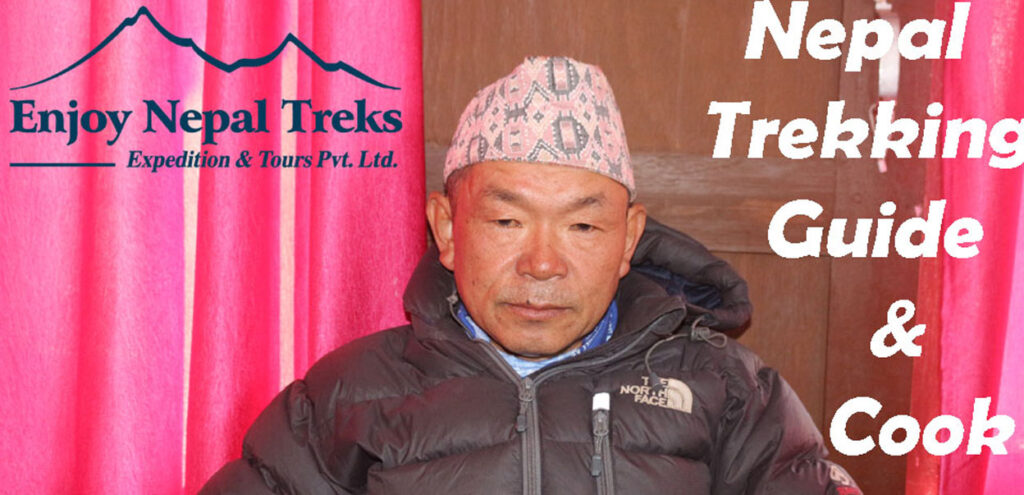
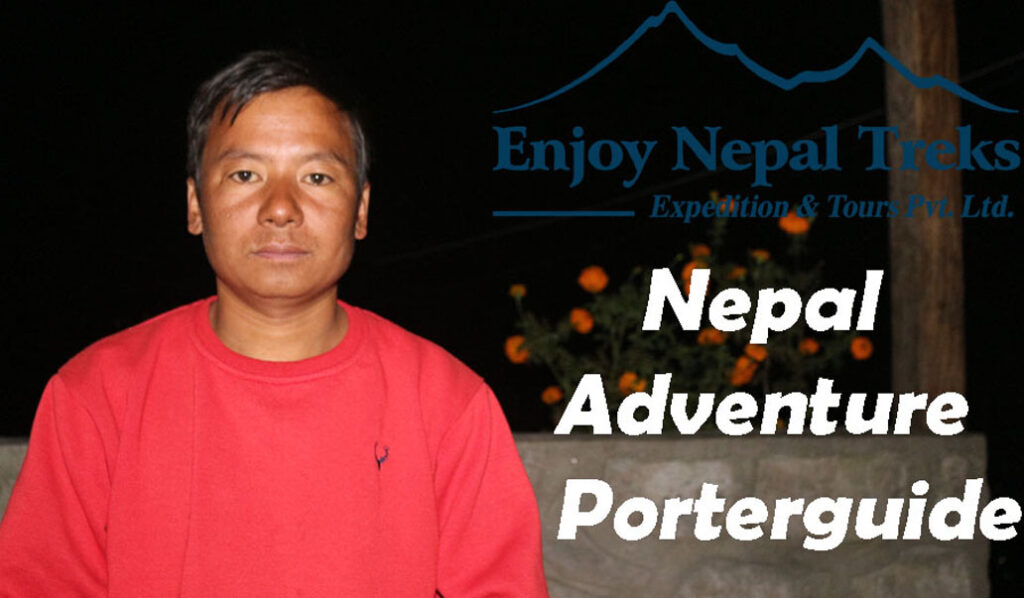
Enjoy Nepal Treks Expedition & Tours Pvt.Ltd is legally Registered Trekking Agencies in Nepal. Which agency Located at Kapan 12 Kathmandu Nepal and organize your Upper Mustang Trekking Permit with Nepalese Trekking Guide. We have an experience, helpful and knowledgeable Trekking Guide, Porter and Porterguide. So that if you need above the mentioned services contact us. Our Upper Mustang Trekking are as bellow:-
Jiwan Rai: Mr.Jiwan Rai is an experience Trekking Guide in Nepal and as Trekking Guide he has been to Upper Mustang Trek many times. He is license holder Trekking Guide in Nepal and he has been already to Upper Mustang Trek, He knows the well Upper Mustang Trail, Lodges, Culture and Geography so that he is recommended as Trekking Guide for Upper Mustang in Nepal.
Bal Kumar Magar: Mr.Balkumar Magar is an experience and professional Trekking Guide in Nepal, He has been working in Nepal Tourism since long Time and he has been to Upper Mustang Trek Many times, He is well known Person about the Manaslu Trekking. That’s why we would like to recommend Bal Kumar Magar for your Upper Mustang Trek Guide in Nepal. He is license Holder Trekking Guide.
Mingmar Sharpa : Mr.Mingmar Sherpa is a fluent English speaking Trekking Guide as well, he speaks Germany Language. He is a great knowledgeable Trekking Guide in Nepal. He has been to Upper Mustang Trek as Trekking Guide and he knows well Everything about Upper Mustang Trek in Nepal. He is recommended Trekking Guide for Upper Mustang.
Bansaman Rai: Mr.Bansaman Rai is our Trekking Guide, He has been to Upper Mustang Trek, He knows about Upper Mustang Trek. He works as Trekking Guide at our Trekking Agency.
Nir Kumar Rai: Mr.Nir Kumar Rai is license holder Trekking Guide in Nepal at your Trekking agency. We would like to recommend him for your Upper Mustang Trek Guide. He is Professional and experience Trekking Guide in Nepal.
.Kaman Rai: Mr.Kaman Rai is most experience Trekking in Nepal, he has worked in Nepal Tourism more than 40 years already. Of course, he has been Upper Mustang Trek many times. We would like to recommend him for your Upper Mustang Trek Guide in Nepal.
Tes Kumar Rai: Mr.Tes Kumar Rai is an another experience professional Trekking Guide . He has knowledge about Upper Mustang Trek, He has been to Upper Mustang trek as Trekking Guide many times.
Bishan Rai: Mr.Bishan Rai is young Trekking Guide, He has been to Upper Mustang Trek as Porterguide and Guide. He recommend for Upper Mustang Trek Guide.
Jaybir Rai: Mr.Jayabir Rai is flexible Trekking Porterguide at our agency. He is recommend for Upper Mustang Trek Porterguide.
Saroj Rai: Mr.Saroj Rai is young and strong Trekking Guide. He has been to Upper Mustang areas many times. He is recommended as Porterguide for Upper Mustang Trek in Nepal.
Chandra Pravat Rai: Chandra Pravat Rai is work as Porterguide for Upper Mustang Trek in Nepal. He has been to Upper Mustang Trek as Porterguide.
Which is the best Trekking agency and Guide for Upper Mustang Trek
Highly trusted trekking company is Enjoy Nepal Treks and guide teams in Nepal that are consistently recommended for safety, permits handling, and experienced Mustang guides.
Mustang Trekking Agency
Specialized specifically in Upper Mustang and Mustang region treks
Strong local guide team from Mustang itself
Focus on cultural trekking (Lo Manthang, caves, monasteries)
Known for well-organized itineraries and experienced leadership
Good choice if you want a Mustang-focused specialist company
Frequently praised for smooth organization and safety
Good for reliable, well-managed full-package trekking
Mostly Recommended Agency and Guide for Upper Mustang Trek
For the Upper Mustang Trek, choosing a reliable agency and an experienced guide is very important because it is a restricted area (special permit required, remote terrain, and high daily costs).
Here are the most recommended trekking agencies and guide options based on recent trekkers’ feedback and established operators in Nepal:
Top Recommended Agencies for Upper Mustang Trek
Enjoy Nepal Treks (Highly Recommended) agency for Upper Mustang Trek
Known for very professional guiding and smooth logistics
Offers guide-only, porter-guide, or full packages
Strong reputation among international trekkers
Flexible itineraries and good support system
Widely praised for Upper Mustang and other remote treks
Best Experienced Guide (What to look for)
Instead of only choosing a name, make sure your guide has:
Government licensed trekking guide certificate (mandatory)
Experience in Upper Mustang restricted area
Strong knowledge of Tibetan culture & monasteries
First aid + altitude experience
Good English communication
Familiarity with jeep + trekking hybrid routes
Which monasteries are famous in Upper Mustang Trek?
The Upper Mustang region of Upper Mustang is famous for ancient Tibetan Buddhist monasteries, cave gompas, and centuries-old wall paintings. These monasteries are among the biggest cultural highlights of the trek.
Most Famous Monasteries in Upper Mustang
Lo Gekar Monastery
Also called Ghar Gompa, it is considered one of the oldest monasteries in Nepal, believed to be founded in the 8th century by Guru Rinpoche.
Why famous:
Ancient Buddhist murals
Strong spiritual importance
Beautiful isolated location
Pilgrims believe wishes come true after circling the monastery
Thubchen Monastery
Located inside the walled city of Lo Manthang, this is one of the most impressive monasteries in Mustang.
Highlights:
Massive clay walls
Ancient mandalas and paintings
Restored traditional architecture
Important festival ceremonies during Tiji Festival
Jampa Monastery
Known as the “God House,” it was built in the 15th century.
Why visit:
Huge assembly hall
Rare Buddhist scriptures
Colorful murals
Historical royal connections
Chode Monastery
This monastery belongs to the Sakya tradition of Tibetan Buddhism.
Known for:
Residence of monks and lamas
Traditional rituals
Spiritual center of Lo Manthang
Festival activities during Tiji
Luri Gompa
One of the most mysterious cave monasteries in Mustang.
Highlights:
Hidden cave monastery
Spectacular ancient paintings
Chortens inside caves
Remote adventure from Yara village
Many trekkers combine it with the Yara–Ghara route.
Namgyal Monastery
A hilltop monastery above Lo Manthang.
Special features:
Excellent views over Lo Manthang
Meditation and ritual site
Quiet atmosphere
Historic protector monastery
Tashi Kabum Cave Monastery
A smaller but beautiful cave gompa carved into cliffs.
Interesting for:
Meditation caves
Unique rock formations
Old paintings and statues
Best Monastery Experience Route
For monastery lovers, this trekking route is excellent:
Kagbeni → Ghami → Lo Gekar Monastery → Lo Manthang → Yara → Luri Gompa
This route combines:
Ancient monasteries
Cave gompas
Tibetan culture
Wall city heritage
Remote landscapes
Best Time to Visit Monasteries
The best seasons are:
April–May
September–October
During the Tiji Festival, monasteries become especially vibrant with masked dances, rituals, and ceremonies.
Which Caves are famous in Upper Mustang Trek?
Upper Mustang is famous for its ancient sky caves, meditation caves, monasteries, and cliff-side cave complexes. Many of these caves are over 2,000 years old and were used for meditation, burial chambers, storage, and hidden settlements.
Here are the most famous caves during the Upper Mustang Trek:
Chhoser Sky Caves
The most famous cave complex in Upper Mustang. Thousands of man-made caves are carved high into the cliffs near Chhoser village, close to Lo Manthang.
Highlights
Multi-story cave system
Ancient Buddhist meditation rooms
Old manuscripts and artifacts discovered
Spectacular cliff architecture
Main caves in Chhoser
Jhong Cave
Nyiphu Cave
Garphu Cave
Jhong Cave
A five-story cave complex with ladders, tunnels, sleeping rooms, and prayer chambers.
Why famous?
Built directly into vertical cliffs
Ancient defensive and residential use
Amazing panoramic views of Mustang valley
Visitors usually explore it during acclimatization or side trips from Lo Manthang.
Nyiphu Cave
A sacred meditation cave connected with Buddhist practice.
Features
Monastic prayer rooms
Old statues and murals
Spiritual atmosphere
Important for Tibetan Buddhism
Luri Gompa Cave
One of the holiest cave monasteries in Upper Mustang, usually visited on the Yara–Ghara route.
Highlights
Ancient cave monastery
Beautiful wall paintings
Stupas and Buddhist relics
Strong spiritual importance
The cave is partly underground and hidden within rock formations.
Garphu Cave
Associated with the great Tibetan saint Guru Rinpoche (Padmasambhava).
Special significance
Meditation site of Guru Rinpoche
Sacred pilgrimage location
Important Buddhist murals and statues
Rachen Cave
Less visited but culturally important. Used historically by monks and hermits for meditation retreats.
Why Upper Mustang Caves Are Unique
The caves of Upper Mustang are considered among the world’s greatest cliff cave systems. Archaeologists discovered:
Ancient human skeletons
Buddhist manuscripts
Murals
Pottery and artifacts
Hidden settlements
Some cave systems contain thousands of rooms carved into cliffs over centuries.
Best Route to Visit Most Famous Caves
A trekking route including:
Lo Manthang
Chhoser
Yara
Luri Gompa
Why Upper Mustang is famous for Trek?
The Upper Mustang trek is famous because it offers a rare mix of Tibetan culture, desert mountain landscapes, ancient history, caves, monasteries, and restricted-region adventure. It feels very different from other trekking regions in Nepal.
Main Reasons Why Upper Mustang Is Famous
Ancient Tibetan Culture
Upper Mustang was once the independent Kingdom of Lo. The region still preserves strong Tibetan Buddhist traditions, old villages, prayer walls, chortens, and traditional lifestyles.
Famous cultural places include:
Lo Manthang — the ancient walled capital
Thubchen Monastery
Jampa Monastery
Unique Desert Landscape
Unlike the green trekking areas of Nepal, Upper Mustang has dramatic red cliffs, deep canyons, dry valleys, and colorful rock formations. Many trekkers compare it to Tibet.
Popular scenic areas:
Dhakmar
Yara
Ghami
Ancient Sky Caves
Upper Mustang is famous for mysterious cave systems carved high into cliffs over 2,000 years ago. Some were used for meditation, burial, and shelter.
Well-known caves:
Luri Gompa
Chhoser Caves
Restricted and Remote Adventure
Upper Mustang was closed to foreign visitors until 1992. Even today, trekkers need a special restricted-area permit and a licensed guide. This makes the trek feel exclusive and less crowded.
Rain Shadow Region
Upper Mustang lies behind the Annapurna and Dhaulagiri ranges, so it receives very little monsoon rain. It is one of the best trekking destinations in Nepal during June, July, and August.
Tiji Festival
The famous Tiji Festival is a major attraction. Monks perform masked dances and rituals celebrating the victory of good over evil.
Combination of Trekking and History
Trekkers experience:
Himalayan views
Medieval villages
Ancient monasteries
Local Tibetan-influenced culture
Fossil-rich Kali Gandaki valley
Remote trails and jeep tracks
This combination makes Upper Mustang one of Nepal’s most culturally rich trekking regions.
Best Highlights of the Trek
Lo Manthang
Kagbeni
Muktinath Temple
Luri Gompa
Chhoser
Dhakmar
Many trekkers call Upper Mustang the “Last Forbidden Kingdom” of Nepal because of its preserved culture and remote Himalayan atmosphere.
Why Lomanthang is famous?
Lo Manthang is famous because it was the historic walled capital of the former Kingdom of Mustang and remains one of the most culturally preserved Tibetan-influenced regions in Nepal.
Here are the main reasons Lo Manthang is well known:
Ancient Walled City
Lo Manthang is famous for its centuries-old mud-brick walls, narrow alleys, royal palace, and traditional Tibetan-style houses. The city was founded in the 14th century by King Ame Pal.
Rich Tibetan Buddhist Culture
The town preserves strong Tibetan Buddhist traditions, language, dress, festivals, monasteries, and lifestyle. Because Upper Mustang was restricted to outsiders for many years, its culture stayed highly authentic.
Famous Monasteries
Lo Manthang has several important monasteries that are hundreds of years old, including:
Jampa Monastery — known for giant Buddha statues and ancient wall paintings
Thubchen Monastery — famous for beautiful murals
Chode Monastery — an important monastery of the region
Tiji Festival
Lo Manthang is internationally famous for the annual Tiji Festival, a colorful Buddhist festival with masked dances, rituals, and prayers celebrating the victory of good over evil.
Gateway to Ancient Caves
The area around Lo Manthang contains mysterious sky caves carved into cliffs, including caves near Chhoser and Nyphu. Some are believed to be over 2,000 years old.
Unique Desert Landscape
Unlike green trekking areas in Nepal, Lo Manthang lies in the rain-shadow of the Himalayas and has dramatic desert-like landscapes, deep canyons, colorful cliffs, and snow-covered mountain views.
Former Forbidden Kingdom
Upper Mustang was restricted to foreigners until 1992. This isolation helped preserve its ancient traditions and made Lo Manthang one of Nepal’s most unique cultural destinations.
Upper Mustang Trek daily Budget how much?
The daily budget for the Trek depends on your trekking style, transport, and whether you book a package or trek with customized services.
Average Daily Budget (2026)
Budget Trekker
USD 120–160 per day
Approx. NPR 16,000–22,000
Includes:
Basic teahouse accommodation
Simple meals (dal bhat, noodles, tea)
Shared guide/porter costs
Jeep sharing or local transport
Mid-Range Trekker
USD 180–250 per day
Approx. NPR 24,000–34,000
Includes:
Better lodges
Private guide
Flights or private jeep
More comfortable meals/snacks
Luxury / Private Trek
USD 300–500+ per day
Approx. NPR 40,000–68,000+
Includes:
Private jeep
Experienced guide & porter
Better hotels in Pokhara/Jomsom
Flexible itinerary and premium services
Main Daily Expenses
Item
Approx Daily Cost
Accommodation
USD 5–30
Meals
USD 40–50
Guide
USD 50–55
Porter
USD 25–30
Snacks/Charging/WiFi
USD 5–15
Jeep/Flight share
Variable
Important Fixed Costs
These are separate from daily spending:
Restricted Area Permit: about USD 500 for 10 days (some 2026 updates mention USD 50/day system)
ACAP Permit: around USD 25–30
Guide is mandatory in Upper Mustang
Typical Total Budget
Trek Style
Total Cost
Budget
USD 1,500–2,000
Mid-range
USD 2,200–3,000
Luxury
USD 3,500+
for a standard 12–15 day itinerary.
Money-Saving Tips
Join a small group to share permit and guide costs
Use jeep one way and trek the other way
Carry snacks from Pokhara or Kathmandu
Drink boiled/refill water instead of bottled water
Trek in shoulder seasons for better lodge prices
Upper Mustang is one of Nepal’s most expensive treks mainly because of the restricted-area permit, but it is also one of the most culturally unique trekking regions in the Himalayas.
How many Tourist Trek to Upper Mustang in a year?
The number of tourists visiting Upper Mustang each year is relatively small and strictly controlled, because it is a restricted trekking area in Nepal.
Based on recent official data:
In 2023: about 3,487 tourists visited
In 2024: around 4,061–4,219 foreign tourists visited
Earlier years (2021–2022) were lower, around 300–3,200 visitors per year due to COVID recovery
So, the realistic yearly range today is:
About 3,500 to 4,200 foreign tourists per year
Important note
This number includes only foreign trekkers with special permits
Domestic Nepali visitors are usually counted separately and are much higher in total Mustang district, but Upper Mustang restricted area remains tightly limited
Why the number is low
USD 500 permit for 10 days
Restricted area permit system
Controlled entry to protect culture & environment
Limited infrastructure and guided trekking requirement
If you want, I can also break down:
monthly tourist flow (peak season months)
how this compares to Everest Base Camp or Annapurna Circuit
or how many trekkers are allowed per day under permit rules
Solo or Single Tourist can Trek to Upper Mustang Now?
Yes — solo (single) tourists can now trek to Upper Mustang, but only under strict conditions.
What is allowed in 2026
Recent rule updates show that:
Solo trekkers are now allowed to obtain the Upper Mustang permit individually (no need for a second trekker in some cases)
You can plan and book the trek even if you are alone
Agencies can also pair solo trekkers if needed for permit processing
Still mandatory rules (very important)
Even though solo trekking is now possible, Upper Mustang is still a restricted area, so:
Independent trekking (without agency support) is NOT allowed
A licensed Nepali guide is compulsory
Permits must be arranged through a registered trekking agency
You must follow a fixed itinerary in the restricted zone
Simple summary
Solo traveler? Yes, you can go
Alone without guide/agency? Not allowed
Solo with agency + guide? Fully allowed
Final answer
Yes, you can trek Upper Mustang as a solo traveler in 2026 — but only with a licensed guide and through a trekking agency.
If you want, I can also give you:
Solo Upper Mustang itinerary (10–14 days)
Total cost breakdown for solo trekkers
How agencies arrange “solo permit pairing” system
Just tell me
How much upper Mustang Jeep Tour Cost?
The cost of an Upper Mustang Jeep Tour (2026) depends mainly on the number of days, group size, and comfort level, but here is a realistic breakdown based on current Nepal travel pricing:
Upper Mustang Jeep Tour Cost (2026)
Budget package
USD $1,000 – $1,400 per person
4–6 days jeep tour (Pokhara–Jomsom–Lo Manthang–back)
Basic hotel/tea house accommodation
Shared jeep (4–6 people)
Standard guide + permits included
Mid-range package (most common)
USD $1,400 – $2,000 per person
6–8 days jeep tour
Better hotels/comfort lodges
Experienced guide + private or semi-private jeep
All permits + meals included
Luxury/private jeep tour
USD $2,000 – $3,000+ per person
Private 4×4 jeep (Scorpio/Prado type)
Flexible itinerary (Lo Manthang, caves, side valleys)
Best available lodges in Mustang
Senior guide + full service
What makes it expensive?
Upper Mustang is a restricted area
Special permit cost is high (around $500 or $50/day depending on duration)
4×4 jeep + fuel + driver for rough mountain roads
Mandatory guide service
Limited tourism zone (low availability = higher price)
Quick simple answer
Most travelers pay around $1,500–$2,000 per person for a standard Jeep tour
If you want, I can also give you:
5-day or 7-day jeep itinerary
Cheapest agency options from Kathmandu/Pokhara
Cost for Nepali vs foreign tourists
Group vs solo pricing breakdown
Electricity and Internet info of Upper Mustang Trek
Here’s a clear, practical overview of electricity and internet (Wi-Fi & mobile network) in the Upper Mustang Trek:
Electricity in Upper Mustang Trek
Electricity is available but limited and not fully reliable:
Most villages (Kagbeni, Chele, Ghami, Tsarang, Lo Manthang) use solar power and small hydropower systems
Power supply is usually not 24/7
Electricity is often available only for a few hours in the evening
Many teahouses charge a small fee for charging devices
Charging is usually done in common dining areas, not in rooms
Typical situation:
Lights: OK in evening
Charging phones/cameras: Yes, but time-limited
Power cuts: Common
Tip:
Bring a power bank (20,000–30,000+ mAh) or even a solar charger for longer treks.
Internet (Wi-Fi & Mobile Network)
Internet exists, but it is slow, expensive, and unreliable.
Mobile Network
Best provider: Nepal Telecom (NTC) (stronger than Ncell in Mustang)
Works well in:
Jomsom
Kagbeni
Muktinath
Lo Manthang (intermittent)
Outside villages: signal often drops or disappears
Data is usually:
3G/4G in some main villages
Weak or no signal in remote sections
Wi-Fi in Teahouses
Available in some lodges in Kagbeni, Muktinath, Lo Manthang
Usually:
Paid service (around NPR 200–500 or ~USD 1–4 per use)
Don’t depend on internet for navigation or emergencies
If you want, I can also give you: “Best SIM card + data package for Upper Mustang” “Where internet is strongest on the whole trekking route day-by-day” “Work-friendly connectivity itinerary (for remote workers)”
Guide and Porter Tips info for Upper Mustang Trek
Tipping for guides and porters on the Upper Mustang Trek is not mandatory in Nepal, but it is a widely expected and appreciated part of trekking culture—especially in remote, restricted regions like Upper Mustang where services are limited and demanding.
Here’s a clear, practical guide:
Guide & Porter Tips (Upper Mustang Trek)
Trekking Guide Tip
For a licensed trekking guide (who leads navigation, permits, logistics, and safety):
Standard tip: NPR 10,000 – 15,000 per day (per group)
For a full Upper Mustang trek (10–14 days):
Total tip range: NPR 30,000 – 80,000 per group
If you are a solo trekker or small group, aim toward the higher end per person.
Porter Tip
For porters carrying luggage (usually 15–25 kg):
Standard tip: NPR 20,500 – 30,000 per day per porter
For full trek:
Total tip range: NPR 30,000 – 40,000 per porter
In Upper Mustang, porters work in harsh, dry, windy terrain—so generosity is highly valued.
Recommended Total Budget (Simple Breakdown)
For a typical 12–14 day Upper Mustang trek:
Guide tip: NPR 40,000 – 60,000
Porter tip: NPR 20,000 – 35,000 per porter
Example (1 guide + 1 porter group): Total tips: ~NPR 60,000 – 95,000
When & How to Tip
✔ Best given at the end of the trek (last lodge or Jomsom/airport exit)
✔ Cash in Nepalese Rupees preferred
✔ Hand directly with thanks (small speech appreciated)
Extra Trekking Etiquette Tips
Tip more if:
Weather was difficult (wind, snow, long detours)
Porter carried heavy load or helped beyond duty
Guide handled permits, emergencies, or altitude issues well
You can also gift:
Warm jackets, trekking gear, shoes (very appreciated in Mustang)
Upper Mustang Context
The Upper Mustang region is a high-altitude desert near the Tibetan border, with restricted access and special permits. Services are more limited than in Everest or Annapurna, so staff heavily depend on seasonal trekking income.








Leave a Reply