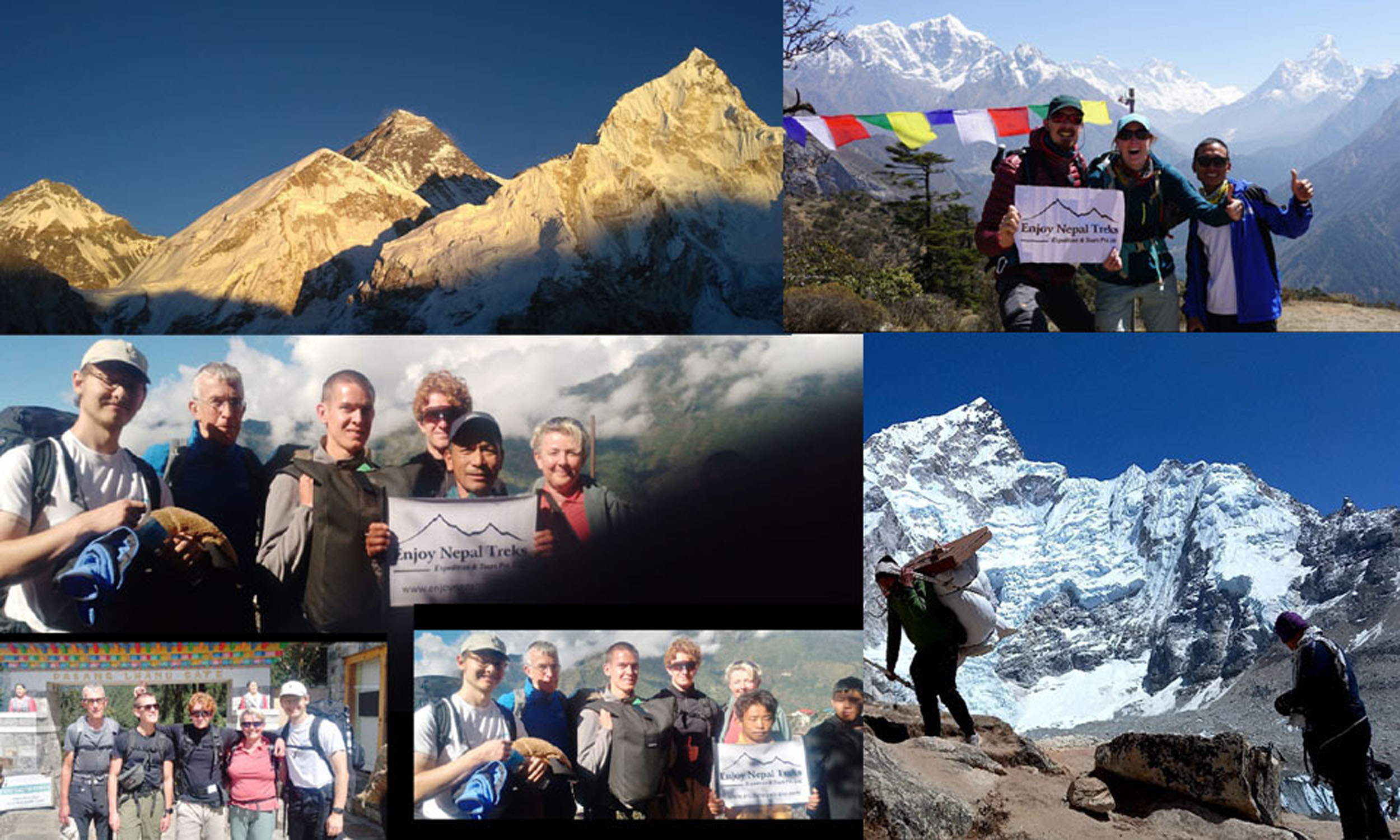
14 days EBC Trek Cost or Price is 2500$

14 days EBC Trek Cost or Price is 2500$

14 days EBC Trek Cost or Price is 2500$

Yes, USD 2,500 for an Everest Base Camp  12 days (EBC) Trek is a normal and reasonable price, especially if the package includes good services and some comfort upgrades. Most standard guided EBC treks are usually priced around USD 2500, while premium or private trips often range from USD 2,500+. We Focus on standard price and Services for EBC Trek in Nepal. We avoid the unhealthy Price competition.

14 days EBC Trek Cost or Price is 2500$

What a USD 2,500 EBC Trek Often Includes

  • 3 Star Kathmandu hotel accommodation 2 nights
  • Round-trip Kathmandu/Ramechhap–Lukla flights
  • Sagarmatha National Park and Khumbu permits
  • Licensed trekking guide (English Speaking)
  • Porter service.
  • Teahouse accommodation during the trek
  • Three meals per day on the trek with Tea and Coffee
  • Airport transfers with Pick up and Drop
  • Duffel Bag
  • Emergency assistance and first-aid support kid
  • Small group or private trek arrangements in some packages
  • Farewell Dinner
  • EBC Trek succeed Certificate
  • Enjoy Nepal Trek’s Down Jacket, Cap and Sleeping Bag.
  • Seasonal Fruits.
  • Trekking Map.
  • Trekking Poles.

What a USD 2,500 EBC Trek Often Excludes

  • Meals in Kathmandu
  • Personal expenses
  • Helicopter
  • Trekking Equipments
  • Tips for Nepali Staffs
  • Client’s insurance
  • Hot Water and Mineral Water.
  • Wifi.
  • Extra accommodation in Kathmandu

14 days EBC Trek Itinerary Details

Day 01: Short flight to Lukla-Walk to Phakding 2610m.3-4hrs(Lodge)

Early in the morning  drive to Airport then 35 minutes  fly to Lukla with small domestic plane.After your landing at Lukla you will have breakfast.After your breakfast walk to the phakding along the Milk River (Dudhkosi and Kusumkosi).The trek begins descent to Kusumkosi which is famous for lunch place.with your lunch enjoy the view of Peak Kusumkhang and continues to Phakding.

Meals: Breakfast/Lunch/Dinner

Accommodation: At lodge

Ascent:200meters

Descent:50 meters

walking distance: 3 to 4 hrs.


Day02:Phakding – Namche 3440m.5hrs.(Lodge)

After having breakfast trek continues along the Dudhkosi River with an incredible view of Mt Thamserku and Kusumkhang by crossing the many of suspension wood and Hillary bridge.At Monjo it is important checked the Sagarmatha national park permits with Pasang lhamu rural community fees.from Monjo walk short down to Jorsale and continues walk to Hillary bridge.From the bridge continues climb up to Namche Bazar through the Everest Gate Way which is  big settlement of sherpa people and local market.Here is available Health post , Trekking shops, Bakery and Internet, post office facilities .

Meals: Breakfast/Lunch/Dinner

Accommodation: At lodge

Ascent:1000meters

Descent:100 meters

walking distance: 6 to 7 hrs.


Day 03:Day hiking day at Namche-Everest view Hotel-Khumjung (Acclimatization) (Lodge)

Today is a acclimatize  day climb up to Everest view Hotel 3800m through the syangboche Airport.After breakfast walk up to Everest view hotel 2-3 hrs and enjoy the view of Mt Amadablam, Thamserku,Lhotse,Nupse,Tawache,Mt Everest.The day is most panoramic and relax acclimatize  day.If you are more interested to visit khumjung Village walk down   30 minutes to village or walk down same way to Namche.At Namche the more interesting part is Sherpa museum, Bakery and Trekking shops,Local markets if you want  to more interested.

Meals: Breakfast/Lunch/Dinner

Accommodation: At lodge

Ascent:350  meters

Descent:350 meters

walking distance: 4-5  hrs.


Day 04:Namche-Tengboche 3900m. (Lodge)

After breakfast the trail goes through the Sangnasa and Teshinga Village.from here descent up to Phungi Tenga Dudhkori River.From here climb up to Tengboche.The day as well most panoramic day .The place Tengboche also most interesting place for the Everest range panorama with Very old Tengboche Monastery.The monastery was destroyed by earthquake in 1934 and rebuilt.Again the monastery burned in 1989  and it was restored by German Help after 2 years.Tengboche is surrounded by high Himalayan peaks, it is best for photography in the morning with sunshine and in the evening with sunset.

Meals: Breakfast/Lunch/Dinner

Accommodation: At lodge

Ascent:900  meters

Descent:500 meters

walking distance: 5 hrs. /15 km


Day 05: Tengboche-Dingboche 4110m.5hrs(Lodge)

Walk down through the forest to Dudhkosi River and continues  climb  to Pangboche village.On the way enjoy the  mountain view of khumbu Region again.

Meals: Breakfast/Lunch/Dinner

Accommodation: At lodge

Ascent:700  meters

Descent:300 meters

walking distance: 5 hrs. /15 km


Day 06: Dingboche (Acclimatization) (Lodge)

We have again acclimatization   day.After breakfast we climb up to 500 meters and come back to lodge.The day offers you a great  panorama of Himayalan background .

Meals: Breakfast/Lunch/Dinner

Accommodation: At lodge

Ascent:500  meters

Descent:500 meters

walking distance: 4 hrs. /6 km


 Day 07: Dingboche-Lobuche 4900m.5hrs(Lodge)

The trail goes through the Thukla.It is better to have short tea break here.On the way no lodge before Lobuche .From Thukla continues climb up to Lobuche.Here are few lodges therefore better to book your room one day before.

Meals: Breakfast/Lunch/Dinner

Accommodation: At lodge

Ascent:700  meters

walking distance: 5-6 hrs. /12 km


Day 08: Lobuche-Gorekshep 5140m.After lunch day hike to Everest base Camp 5364m.7hrs.

Gorekshep is about 6 km far away from Lobuche.It takes 3hrs around to reach Gorekshep from Lobuche.After having lunch you hike to Everest Base camp 5364meters and explore the gigantic view of khumbu glacier , Everest Base Camp.finally same way come back to Gorekshep.

Meals: Breakfast/Lunch/Dinner

Accommodation: At lodge

Ascent:650  meters

walking distance: 6-7 hrs. /12 km


Day 09: Gorekshep-Kalapathar 5550m-Thukla 4620m.6hrs(Lodge)

get up early in the morning ,prepare well your equipment like warm gloves, jackets, woolen hat, light,shoes, socks, some chocolates, biscuit and water  . you climb to Kalapathar (black stone) at 4:30 am.It takes up and down to 4 hrs.Kalapathar is famous for mt everest massive panorama view with an amazing sunrise.Enjoy the rounded mountains view and come back to Gorekshep.After having breakfast walk down to Thukla same way through the Lobuche.

Meals: Breakfast/Lunch/Dinner

Accommodation: At lodge

Ascent: 400 meters

Descent :650  meters

walking distance: 6 hrs. /15 km


Day 10: Thukla-Tengboche 3900m.5hrs (Lodge)

Walk down hill through the Periche  village and Pangboche  to Tengboche. Afternoon visit the monastery and monks if are interested.

Meals: Breakfast/Lunch/Dinner

Accommodation: At lodge

Ascent: 150 meters

Descent :1300  meters

walking distance: 5 hrs. /14 km


Day 11: Tengboche-Namche or Monjo 5-7hrs.(Lodge)

Walk down 200 meters to Dudhkori River and climb up to Sanasa village.From here continues to Namche Bazar.It takes 5 hrs around to Namche Bazar from Tengboche. Depends on your condition if you are more interested to walk walk you can continues to Monjo viallge.The place is 2-3 hrs far way from Namche.

Meals: Breakfast/Lunch/Dinner

Accommodation: At lodge

Ascent: 150 meters

Descent :1300  meters

walking distance: 5-7 hrs. /14 km


Day 12: Namche or Monjo-Lukla 5-7hrs.(Lodge)

The day is  your final and long walking day for your trek to Lukla.Follow the same way through the Monjo, phakding to Lukla.Lukla is a great place after your trek.You can go to Bakery shops if you want.In the evening if you are interested to hand over some Tips to your porters that you can.It is the final  day to be  with your porters.

Meals: Breakfast/Lunch/Dinner

Accommodation: At lodge

Ascent: 200 meters

Descent :680  meters

walking distance: 5-7 hrs. /15 km


Day 13:Early in the morning fly back to kathmandu.

Early in the morning fly back to kathmandu  and drive to your Hotel.

Meals: Breakfast/

Accommodation: Hotel

Flying duration: 35 minutes


Day 14: Departure

you will be picked up at your hotel and drive to Airport by an agency


EBC Trek equipment or gear list

Bags & Storage

  • Duffel bag (70–90L) for porter
  • Daypack (25–35L) with rain cover
  • Dry bags or waterproof stuff sacks
  • Packing cubes (optional)

Clothing (Layer System)

Base Layers

  • 2–3 moisture-wicking trekking shirts
  • 1–2 thermal tops
  • 1–2 thermal bottoms
  • Quick-dry underwear (4–6 pairs)

Mid Layers

  • Fleece jacket
  • Light insulated jacket

Outer Layers

  • Waterproof/windproof shell jacket
  • Waterproof trekking pants

Warm Layers

  • Down jacket (essential above 4,000m)
  • Warm lodge pants or fleece pants

Trekking Pants

  • 2 pairs quick-dry trekking pants
  • Optional trekking shorts for lower elevations

 Head & Hand Protection

  • Warm beanie or wool hat
  • Sun hat/cap
  • Buff or neck gaiter
  • Lightweight gloves
  • Insulated waterproof gloves
  • UV-protection sunglasses (Category 3 or 4)

 Footwear

  • Waterproof trekking boots (well broken-in)
  • Camp shoes or sandals
  • 4–6 pairs trekking socks
  • 1–2 pairs liner socks
  • Gaiters (winter or snowy conditions)

 Sleeping Gear

  • Sleeping bag rated around -10°C to -20°C
  • Sleeping bag liner
  • Earplugs

 Water & Hydration

  • 2 reusable water bottles (1L each)
  • Water purification tablets or filter
  • Electrolyte powder

 Electronics

  • Headlamp with spare batteries
  • Power bank (10,000–20,000 mAh)
  • Phone charger
  • Camera (optional)
  • Universal travel adapter

 First Aid & Health

  • Personal medications
  • Blister treatment (Compeed, tape, bandages)
  • Pain relievers
  • Antiseptic wipes
  • Hand sanitizer
  • Sunscreen SPF 50+
  • Lip balm with SPF
  • Basic first-aid kit

Toiletries

  • Toothbrush & toothpaste
  • Small quick-dry towel
  • Wet wipes
  • Toilet paper
  • Soap/shampoo
  • Nail clipper

Documents & Money

  • Passport
  • Nepal visa copy
  • Travel insurance
  • Flight tickets
  • Passport photos
  • Cash (NPR) for teahouses, charging, Wi-Fi, and snacks

Optional but Very Useful

  • Trekking poles
  • Snacks (energy bars, nuts, chocolate)
  • Book or cards
  • Pillowcase
  • Microspikes/crampons in winter conditions
  • Camera tripod

Best time for EBC Trek

The best time for the Everest Base Camp (EBC) trek is generally:

Spring (March–May)

  • Mild temperatures and stable weather
  • Rhododendron forests are in bloom
  • Clear mountain views, especially in April
  • Busy trails because it’s also Everest climbing season
  • Best if you want the classic EBC experience and to see expedition activity at Base Camp

Autumn (Late September–November)

  • Widely considered the best overall season
  • Crisp air and excellent visibility after the monsoon
  • Stable weather and dry trails
  • October has the clearest skies but is also crowded
  • November offers fewer trekkers while still providing spectacular views

Quick Month-by-Month Guide

Month Conditions Crowds
March Cool, clear, flowers starting Moderate
April Excellent weather, blooming trails High
May Warmest spring month, more climbers High
June–August Monsoon, rain, clouds, flight delays Low
September Monsoon fading, greener landscapes Moderate
October Best visibility and weather Very High
November Clear skies, colder nights, fewer crowds Moderate
December–February Cold, snow possible, very quiet Low

If you’re choosing one month

  • Best weather & views: October
  • Best balance of views and fewer crowds: Early November
  • Best for flowers and Everest expedition atmosphere: April

Lodge and accommodation info of EBC Trek

The standard accommodation on the Everest Base Camp (EBC) Trek is teahouses (mountain lodges) run by local Sherpa families. They are simple, welcoming, and available in almost every village along the trail.

Typical Room Facilities

Most rooms include:

  • Twin beds with mattress, pillow, and blanket
  • Small table or shelf
  • Shared bathrooms in most lodges
  • Thin wooden walls with limited insulation
  • No room heating at higher elevations

A warm sleeping bag is highly recommended because bedrooms can be very cold at night.

Accommodation Quality by Location

Place Accommodation Standard
Lukla Comfortable lodges, some attached bathrooms
Phakding Good teahouses with hot showers
Namche Bazaar Best range of lodges, Wi-Fi, bakeries, luxury options
Tengboche Basic to moderate lodges
Dingboche Comfortable teahouses, some upgraded lodges
Lobuche Basic accommodation
Gorak Shep Most basic and crowded lodges on the trek

Facilities generally become more limited as altitude increases.

Dining Hall & Food

The dining room is usually the warmest place in the lodge:

  • Central stove (often yak-dung or wood-fired)
  • Dal Bhat, noodles, fried rice, soups, potatoes, eggs, pancakes
  • Tea, coffee, hot chocolate, and snacks
  • Social atmosphere with trekkers from around the world

Most trekkers spend evenings in the dining hall because bedrooms are unheated.

Bathrooms, Showers & Charging

  • Shared toilets are standard.
  • Hot showers are available in many villages for an extra charge.
  • Charging phones and cameras usually costs extra.
  • Wi-Fi is available in many lodges but becomes slower and more expensive at higher elevations.

Lodge Prices (Approximate)

Altitude Area Room Cost
Lukla–Namche NPR 500–1,500
Tengboche–Dingboche NPR 500–1,200
Lobuche–Gorak Shep NPR 800–2,000

In peak trekking seasons (March–May and October–November), many lodges expect guests to eat dinner and breakfast at the lodge where they stay.

Luxury Lodge Option

Luxury lodges are available mainly in:

  • Lukla
  • Namche Bazaar
  • Debuche
  • Some lodges in Dingboche

These may offer:

  • Attached bathrooms
  • Better beds and bedding
  • Heated dining areas
  • Improved food menus
  • More reliable Wi-Fi and charging facilities

However, above Lobuche and Gorak Shep, even luxury treks use basic mountain lodges due to the extreme environment.


Meals information of EBC Trek

Meals on the Everest Base Camp (EBC) Trek are served in teahouses and lodges along the trail. The menu is surprisingly varied, although food becomes more expensive and simpler as you gain altitude because supplies are carried by porters, yaks, and helicopters.

Breakfast

Most trekkers eat breakfast between 7:00–8:30 AM before starting the day’s hike. Common options include:

  • Tibetan bread with honey, jam, or peanut butter
  • Porridge (oats, muesli, cornflakes)
  • Pancakes (plain, apple, banana, chocolate)
  • Toast with butter, jam, cheese, or eggs
  • Omelets, boiled eggs, scrambled eggs, fried eggs
  • Chapati or roti
  • Tea, coffee, hot chocolate, ginger tea, lemon tea

These foods provide carbohydrates and energy needed for long trekking days.

Lunch

Lunch is usually eaten at a teahouse along the trail.

Popular choices:

  • Dal Bhat (rice, lentil soup, vegetables, pickle)
  • Fried rice (vegetable, egg, cheese, tuna)
  • Chow Mein (fried noodles)
  • Thukpa (noodle soup)
  • Momos (dumplings)
  • Pasta and spaghetti
  • Sandwiches
  • Pizza (available in many villages)

The most recommended meal is Dal Bhat, often served with free refills and a good balance of carbohydrates, protein, and vegetables.

Dinner

Dinner is usually served around 6:30–8:00 PM at the lodge where you stay.

Common dinner meals:

  • Dal Bhat
  • Garlic soup
  • Sherpa stew
  • Thukpa
  • Fried rice
  • Potatoes
  • Noodle dishes
  • Vegetable curry with rice or chapati

Garlic soup and warm soups are especially popular at higher elevations because they help with hydration and warmth.

Drinks

Popular drinks on the EBC Trek include:

  • Black tea
  • Ginger tea
  • Lemon ginger honey tea
  • Masala tea (Nepali chai)
  • Coffee
  • Hot chocolate
  • Butter tea
  • Hot lemon

Trekkers should drink at least 3–4 liters of water daily to stay hydrated and reduce the risk of altitude sickness.

Food Safety Tips

  • Dal Bhat, soups, potatoes, rice, and freshly cooked vegetarian meals are usually the safest choices.
  • Many guides recommend limiting meat consumption above Namche Bazaar because refrigeration is limited at high altitude.
  • Use boiled, filtered, or purified water instead of untreated tap or stream water.

Typical Daily Meal Plan

Breakfast: Porridge + eggs + tea
Lunch: Dal Bhat or fried rice + tea
Dinner: Garlic soup + Dal Bhat or Thukpa + hot ginger tea


Hospital’s Contact Number of EBC Trek

Here are some important hospital and medical clinic contact numbers commonly used on the Everest Base Camp trekking route:

  • Khunde Hospital (Khunde near Namche Bazaar)
    +977-38-540053
  • The Mountain Medical Institute (Namche Bazaar)
    +977-9852850021
  • Himalayan Rescue Association (HRA) Aid Post, Pheriche
    +977-1-4440293 (Kathmandu Office)
  • HRA / Pheriche Clinic Emergency Contact
    +977-1-4493003 (Kathmandu Office)
  • Lukla Hospital
    +977-38-550119

EBC Trek Permits Cost or Price info

For the Everest Base Camp trek, you generally need 2 mandatory permits in 2026:

Permit Foreign Nationals SAARC Nationals
Sagarmatha National Park Entry Permit NPR 3,000 (~USD 22–30) NPR 1,500
Khumbu Pasang Lhamu Rural Municipality Permit NPR 3,000 (~USD 20–22) NPR 2,000–3,000
Total NPR 6,000 (~USD 45–55) NPR 3,500–4,500

Many recent trekking sources state that the TIMS card is no longer required for the Everest/Khumbu region, having been replaced by the local Khumbu permit.

Where to Get the Permits

  • Sagarmatha National Park Permit
    • Nepal Tourism Board office in Kathmandu
    • Monjo National Park entrance checkpoint
  • Khumbu Pasang Lhamu Permit
    • Lukla permit counter
    • Monjo checkpoint on the trekking route

Documents Needed

  • Original passport
  • Passport-sized photos (recommended)
  • Cash payment in Nepali Rupees

EBC Trek Guide cost or price

The Everest Base Camp (EBC) trek guide cost in 2026 depends on experience level, group size, and whether you hire a private or group guide.

 Guide cost in Nepal (EBC trek)

  • Licensed trekking guide (per day):
    $25 – $40 USD per day
  • Experienced senior/private guide:
    $40 – $60 USD per day
  • Porter + guide package (common option):
    Guide: $30–$35/day
    Porter: $25–$27/day

EBC Trek Weather information

The Everest Base Camp (EBC) trek weather changes drastically by season and altitude—from Lukla (~2,860 m) to Base Camp (~5,364 m). You’ll experience cold nights year-round, but conditions depend mainly on whether it’s winter, spring, monsoon, or autumn.

 Overview of EBC Trek Weather

At high altitude, the weather is cold, dry, and unpredictable, and temperature drops sharply as you climb. Even in the same day, you can feel warm sun at lower villages and freezing conditions at higher camps.

 Spring (March – May) — Best trekking season

  • Day temperature: ~5°C to 15°C
  • Night (high altitude): down to -10°C or lower
  • Weather: Mostly clear mornings, light clouds afternoon
  • Conditions: Rhododendrons bloom, stable trekking weather

This is one of the best times for EBC, with good visibility and comfortable trekking conditions.

Monsoon (June – August) — Least favorable

  • Day temperature: ~10°C to 20°C
  • Heavy rainfall: especially July–August
  • Conditions: Cloudy skies, slippery trails, poor mountain views

Expect rain, mud, leeches in lower areas, and frequent flight delays to Lukla.

 Autumn (September – November) — BEST season

  • Day temperature: ~5°C to 15°C
  • Night temperature: -5°C to -15°C
  • Weather: Crystal-clear skies, dry air, best mountain views

Widely considered the best overall time for EBC trekking due to stable weather and excellent visibility.

 Winter (December – February) — Very cold but possible

  • Day temperature: ~-5°C to 5°C
  • Night (EBC/Gorakshep): -15°C to -25°C
  • Conditions: Snow, icy trails, fewer trekkers

Very quiet trails, but extreme cold and possible lodge closures at higher altitude.

 Simple Summary

  •  Best months: October, November, April, May
  • Worst weather: July–August (monsoon)
  •  Hardest season: December–February (extreme cold)

Best Trekking agency or Company for EBC Trek

For the Everest Base Camp (EBC) Trek, there isn’t just one “best” agency—but there are several highly trusted, licensed, and well-reviewed companies in Nepal that consistently rank among the top choices for safety, guides, and service quality.

Here are some of the best trekking agencies for EBC in Nepal (2026) based on reputation, experience, safety record, and customer feedback:

Enjoy Nepal Treks (Top Premium Choice)

Enjoy Nepal Treks is One of the most trusted and internationally recognized trekking companies in Nepal.

Why it’s recommended:

  • Very strong safety standards & emergency support
  • Highly experienced Sherpa guides
  • Excellent organization (permits, flights, logistics handled smoothly)
  • Good balance of comfort + professionalism
  • Strong global reviews and repeat clients
  • Best for: First-time trekkers who want reliable, stress-free EBC experience

Major Highlights of EBC Trek

Here are the major highlights of the Everest Base Camp (EBC) Trek — the key experiences that make it one of the most iconic treks in the world:

  1. Everest Base Camp (5,364 m)

Standing at the base of the world’s highest mountain, Mount Everest, is the ultimate goal of the trek. You get close to the massive Khumbu Icefall and surrounding Himalayan giants like Lhotse and Nuptse.

  1. Kala Patthar Viewpoint (5,545 m)

This is the best viewpoint of Mount Everest on the entire trek. From here, trekkers get a clear panoramic sunrise view of Everest and surrounding peaks.

  1. Thrilling Lukla Flight

The journey often begins with a short but adventurous flight to Lukla Airport, one of the most exciting mountain airstrips in the world.

  1. Namche Bazaar (Sherpa Capital)

A vibrant mountain town and main trading hub of the Khumbu region. It is also a key acclimatization stop with cafés, bakeries, and stunning mountain views.

  1. Tengboche Monastery

One of the most important Buddhist monasteries in the Everest region, surrounded by views of Ama Dablam and Everest range.

  1. Suspension Bridges & River Valleys

The trail features long hanging bridges over the Dudh Koshi River, decorated with prayer flags — a signature Himalayan experience.

  1. Sagarmatha National Park (UNESCO Site)

The trek passes through a protected region rich in:

  • Himalayan wildlife
  • Rhododendron forests
  • Dramatic mountain landscapes
  1. Sherpa Culture & Himalayan Lifestyle

You experience:

  • Traditional Sherpa villages
  • Buddhist culture (mani walls, prayer wheels, stupas)
  • Local hospitality and mountain traditions
  1. Khumbu Glacier & Icefall Views

Near EBC, you can see the massive glacier system and dangerous Khumbu Icefall, used by climbers heading to Everest summit.

  1. Dramatic Himalayan Scenery Throughout

Throughout the trek you continuously see:

  • Everest (8,848 m)
  • Lhotse
  • Nuptse
  • Ama Dablam
  • Endless snow-covered peaks and deep valleys

Which Mountains are seen while doing EBC Trek?

On the Everest Base Camp (EBC) Trek, you get some of the most dramatic mountain views in the world—especially from viewpoints like Kala Patthar, Tengboche, Dingboche, and Lobuche.

Here are the main mountains you can see:

 Major Himalayan Peaks seen on EBC Trek

1. Mount Everest

Mount Everest

  • Highest mountain in the world (8,848.86 m)
  • Best view: Kala Patthar
  • You don’t see the full pyramid from Base Camp, but it dominates the skyline

2. Lhotse

Lhotse

  • Fourth highest mountain in the world
  • Connected to Everest via the South Col
  • Huge south face visible near Dingboche & Lobuche

3. Nuptse

Nuptse

  • Massive wall-like peak right next to Everest Base Camp
  • One of the first giants you see approaching EBC

4. Ama Dablam (Iconic Peak)

Ama Dablam

  • One of the most beautiful mountains in the Himalayas
  • Visible mainly from Tengboche, Pangboche, and Dingboche
  • Famous for its sharp pyramid shape

5. Pumori (Kala Patthar View Highlight)

Pumori

  • Often called “Everest’s daughter”
  • One of the best mountains seen from Kala Patthar viewpoint
  • Very photogenic pyramid shape

6. Cho Oyu (Distant View)

Cho Oyu

  • Sixth highest mountain in the world
  • Visible from higher points and clear weather days
  • More prominent from Gokyo region but sometimes seen from EBC side ridges

 Other notable peaks you may see

  • Lingtren
  • Khumbutse
  • Changtse (north of Everest, in Tibet)
  • Thamserku (near Namche Bazaar)
  • Kongde Ri (visible from Namche area)

 Best Viewpoint Summary

  • Kala Patthar → Best Everest + Pumori + Nuptse panorama
  • Tengboche → Ama Dablam (most famous view)
  • Lobuche / Gorakshep → Nuptse + Everest massif close-up
  • Namche Bazaar → Thamserku + Kongde Ri + distant Everest range

Total km or miles of EBC Trek

The Everest Base Camp (EBC) Trek distance is:
  • Total round-trip distance (Lukla → EBC → Lukla):
     About 130 km (80 miles)
  • One-way distance (Lukla → Everest Base Camp):
     About 65 km (40 miles)

Quick summary

  • Starts from Lukla (not Kathmandu, if flying)
  • Goes through Namche, Tengboche, Dingboche, Lobuche, Gorakshep
  • Ends at Everest Base Camp (5,364 m)

Extra distance (important)

If you include side hikes:

  • Kala Patthar viewpoint adds ~4–5 km extra
  • Acclimatization hikes add small extra distances each day

Simple answer:

EBC Trek = ~130 km / 80 miles total walking

0  Comments on 14 days EBC Trek Cost or Price is 2500$

Leave a Reply

Your email address will not be published. Required fields are marked *

Categories

Recent Post